
The Atomic Answer Framework, Localised: Winning AI Overviews Across Markets

Summary Atom: Google’s AI Mode can scale to new languages and countries in “months, not years,” per Google’s own Liz Reid, which means an Atomic Answer built only for your home market now has a shrinking shelf life. To be cited internationally, an atom must survive translation, re-entity-resolution, and a different regulatory context in every market you serve, not just the “Island Test” in English.
The 2 Factors Every Forward-Thinking International SEO Is Already Tracking
Two things changed the timeline for international content teams this year:
- AI Mode is scaling faster than any past Search feature. At Google I/O 2026, Liz Reid said AI Mode’s multilingual architecture let it reach “many, many countries, in many, many languages” within months of launch, versus the multi-year rollouts of past Search features (Search Engine Journal). AI Mode has already passed one billion monthly users globally.
- AI Overviews are no longer a US-only concern. They’re live in 200+ countries and 40+ languages, but coverage is uneven and behaves differently by market — which is the part most international content plans still ignore (Discovered Labs).
To expand on point 2: 5 years ago, if you Googled “ayam jantan” in Bahasa Melayu, for example, you would get an English search result definition. Just out of interest, go type in any word in a different language than English and see what happens now. (Ayam Jantan means rooster in Malaysian).
The practical effect: a market you haven’t localised for yet can go from “AI Overviews aren’t really a factor there” to “our competitor is the cited source there” faster than your normal content-ops cycle. The “market-by-market” SEO roadmap has become an outdated approach.
The reality check: AI Overviews don't behave the same in every market
This is the part the original Atomic Answer framework didn’t account for. Independent tracking through 2026 shows real, structural differences by country and language in AI Overviews are LLM results.
| Market signal | What’s actually happening | Source |
|---|---|---|
| Trigger rate | US ~15% of queries, UK ~12%, Germany ~10%, Japan ~8%, Brazil ~6% | Stackmatix |
| Source preference | UK queries more often cite UK-based sources than higher-ranking US content; Japan strongly favors .co.jp and government/academic sites | Stackmatix |
| Language capability tiers | Tier 1 (EN, ES, FR, DE, JA, KO) gets full multi-source citation; Tier 2 (PT, IT, NL, PL, HI) gets standard generation with limitations; Tier 3 (AR, TR, TH, VI) gets simpler formats with fewer citations | Stackmatix |
| Regulatory gaps | France still has no AI Overviews rollout due to unresolved regulatory questions; EU markets overall expand more slowly under Digital Markets Act constraints, with tighter limits on YMYL topics | Discovered Labs, Stackmatix |
| Rollout history | May 2024 US-only → Aug 2024 UK/India/Japan/Brazil/Mexico/Indonesia → Oct 2024 100+ countries → Mar 2025 EU (Austria, Belgium, Germany, Ireland, Italy, Poland, Portugal, Spain, Switzerland) → May 2025 200+ countries including Arabic-speaking markets and China | Discovered Labs |
What to remember: a market’s citation behavior is not a smaller copy of your home market’s. A page that’s an authoritative source in the US AI Overview can be functionally invisible in the German or Japanese one — not because it’s badly written, but because it doesn’t resolve as a trustworthy local entity, in the local language tier, on the local topic sensitivity level.
Extending the "Island Test" for global content: the Local Island Test
The original test: if you cut this paragraph out and put it on a blank island, would it still provide a complete, factual answer without saying “see above” or “click here”?
For international pages, add a second condition:
Local Island Test: If you cut this paragraph out, translate it, and drop it into a search result in Munich, Osaka, or Dubai — does it still cite a standard, a currency, and an authority that the reader actually recognises? Or does it quietly assume US units, US regulations, and a US-based expert?
An atom that passes the original Island Test but fails the Local Island Test isn’t ready to publish outside your home market. This is the single most common reason international pages get outranked by a shallower local competitor in AI Overviews: the atom is factually complete but contextually foreign.
Implementation checklist: the international layer on top of Atomic Answers
Structure: lead with the market-relevant answer, not a translated one
- Don’t machine-translate the Summary Atom. Rebuild it per market with that market’s units, currency, and terminology. “8 to 12 weeks” in the UK version; “10 to 16 Werktage… wait, weeks (8–12 Wochen), plus 2–3 weeks for TÜV re-registration” in the German version, because Germany has an extra regulatory step the UK doesn’t.
- Question-based H2s should match how that market actually phrases the query, not a literal translation of the English one. A German buyer searches “Was kostet eine Elektro-Umrüstung für einen Land Rover Defender?” — structurally similar, but a French buyer more often searches around homologation (the legal approval step) rather than cost first, because in France a converted vehicle can’t be re-registered without it.
- Keep the 40–60-word rule per language, but note that German and Finnish compound words mean word counts compress meaning differently than English — measure by information density (does it answer the question fully?), not a rigid word count in every language.
Data density: tables need market-specific rows, not one translated table
AI Overviews prioritise tables and structured lists across all tiers (Cognizo, Discovered Labs). For an international page, one comparison table beats three paragraphs of prose — but it has to carry local facts, not just local currency symbols.
Example: the same Land Rover EV conversion, four markets, one atomic table
| Market | Typical timeline | Price (local) | Mandatory approval step | Governing standard |
|---|---|---|---|---|
| United Kingdom | 8–12 weeks | £38,000–£52,000 | Individual Vehicle Approval (IVA) via DVSA | UNECE R100 (battery), UK IVA Manual |
| Germany / EU | 10–15 weeks (incl. re-registration) | €42,000–€58,000 | TÜV/DEKRA Einzelabnahme (§21 StVZO) or ECWVTA | UNECE R100, EU Whole Vehicle Type Approval |
| United States | 6–10 weeks | $45,000–$62,000 | State-level emissions/safety inspection (varies by state) | FMVSS 305 (battery electric vehicle safety) |
| Australia | 10–14 weeks | AU$65,000–AU$88,000 | State Individual Compliance Plate approval | Australian Design Rules (ADR), incl. ADR relevant to EV conversions |
This table is a single atom that four different AI Overviews in four different countries can each cite accurately on their own — because each row is complete and locally correct on its own, per the Island Test.
Entity clarity (E-E-A-T), rebuilt per market
- Don’t reuse one global “engineering partner” citation everywhere. Say “Tesla Model 3 Rear-Drive Unit” — and then also name the local certifying body: “certified to UNECE R100 by [named UK test house]” in the UK page, “TÜV-approved under §21 StVZO” in the German page, “tested to FMVSS 305” in the US page. Precision terms have to be precise for that regulator, not just precise in general.
- Author transparency needs a local face. A translated bio of your UK chief engineer reads as imported authority to a German AI system trying to resolve “is this a trustworthy source for TÜV-related claims in Germany?” If you have an in-market technical partner, certifier, or reviewer, name and link them on that market’s page. This is the single biggest lever in Search Engine Land’s 2026 analysis of what’s actually working in international SEO right now: “local authority signals matter more than global brand recognition… in-country experts, local certifications, and market-specific partnerships rather than translated global expert bios” (Search Engine Land).
- hreflang still matters for classic search, but don’t rely on it for AI retrieval. The same analysis notes AI systems can select content “before hreflang signals are evaluated or without consulting them at all” (Search Engine Land). Treat hreflang as necessary hygiene, not as your international AI Overview strategy — the page itself has to independently prove it’s the right local source through entity clarity and structured data, since it may get pulled into a synthesised answer without hreflang ever being consulted.
Multi-modal: localise what’s in the frame, not just the caption
- Alt text should include local terminology, not a translated English phrase: “Batteriegehäuse-Querschnitt des Defender 110 mit Einzelabnahme-relevanten Befestigungspunkten” tells a German AI system exactly why the image is relevant to a §21 StVZO approval question — a literal translation of the English alt text doesn’t.
- Short-form video needs local captions and, ideally, a locally-recognisable presenter or voice for higher-authority markets (Japan and Germany both weight domain and source trust heavily). A 60-second explainer with subtitled English audio reads as imported content; the same clip re-cut with a local voiceover or on-screen local-market data reads as native authority.
The international "Stop / Start" guide
STOP publishing one English atom and running it through machine translation for every market. START rebuilding the Summary Atom per market with that market’s units, currency, terminology, and regulatory step — even when the underlying fact (8–12 weeks) is similar.
STOP citing your global engineering partner as the only technical authority on every localised page. START naming the in-market certifying body or reviewer for each regulatory claim — UNECE R100, §21 StVZO, FMVSS 305, or ADR — because that’s the entity the local AI system needs to resolve trust against.
STOP treating hreflang as your international AI visibility strategy. START treating hreflang as table stakes, and making each localised page independently pass the Local Island Test — factually complete, locally contextualised, and citable on its own, without needing hreflang to route the right reader to it.
STOP assuming a market with a low AI Overview trigger rate today (Japan ~8%, Brazil ~6%) isn’t worth atomic optimisation. START building the atoms now — Google’s own team says AI Mode is scaling to new languages and countries faster than any past Search feature, so low-trigger markets today are the fastest-moving targets, not the safest ones to postpone (Search Engine Journal).
Worked example: one question, four markets
Legacy header (still wrong, still generic): Our High-Quality International Conversion Process
Atomic header, UK: How long does a Land Rover electric conversion take in the UK?
A full in-house conversion typically takes 8 to 12 weeks, including Individual Vehicle Approval (IVA) through the DVSA. Battery packs are certified to UNECE R100. Pricing runs £38,000–£52,000 depending on interior and battery specification. (44 words)
Atomic header, Germany: Was kostet eine Elektro-Umrüstung für einen Land Rover in Deutschland?
Eine vollständige Umrüstung dauert 10 bis 15 Wochen, inklusive Einzelabnahme nach §21 StVZO durch TÜV oder DEKRA. Die Batterie ist nach UNECE R100 zertifiziert. Die Kosten liegen zwischen €42.000 und €58.000, abhängig von Innenausstattung und Batteriekonfiguration. (39 words)
Atomic header, US: How much does a Land Rover EV conversion cost in the United States?
A full conversion typically costs $45,000–$62,000 and takes 6 to 10 weeks, plus state-level inspection, which varies by state. The drivetrain is tested to FMVSS 305 for battery-electric vehicle safety. (32 words)
Atomic header, Australia: How is a Land Rover EV conversion approved for road use in Australia?
Conversions require a state Individual Compliance Plate under the Australian Design Rules and typically take 10–14 weeks, costing AU$65,000–AU$88,000. Approval timelines vary by state transport authority, so confirm local requirements before booking a build slot. (36 words)
Each of these is a standalone atom that passes both the Island Test and the Local Island Test — a reader (or an AI system) in that specific market gets a complete, locally correct answer without needing anything from the other three pages.
Quick reference: the international Atomic Answer checklist
- Summary Atom rebuilt per market — not machine-translated
- H2s phrased the way that market actually searches, not a literal translation
- At least one table per page with market-specific rows (price, timeline, regulation, currency)
- Every technical claim tied to the local regulatory standard (UNECE R100 / §21 StVZO / FMVSS 305 / ADR, or your industry’s equivalents)
- Local certifier, reviewer, or in-market expert named and linked — not a translated global bio
- Alt text and video captions written in-market, not translated from the English original
- hreflang implemented as hygiene, but each localised page independently passes the Local Island Test
- Low-trigger markets (Japan, Brazil, Southeast Asia) treated as build-now priorities, not later-phase work, given AI Mode’s accelerated multilingual
Sources
- International SEO in 2026: What still works, what no longer does, and why — Search Engine Land
- Google AI Overviews Rollout & Availability: Which Markets & Query Types Are Covered — Discovered Labs
- Google AI Overview International and Regional Variations — Stackmatix
- Google AI Overviews 2026: Key Statistics — Cognizo
- Google Says AI Mode Can Now Scale Faster Across Languages — Search Engine Journal
- UNECE Type Approval — Vehicle Certification Agency (UK)
- Testing to UNECE Regulation 100 Requirements for Electric Vehicle Batteries — In Compliance Magazine
Thanks for reading!
More Practical Guide articles
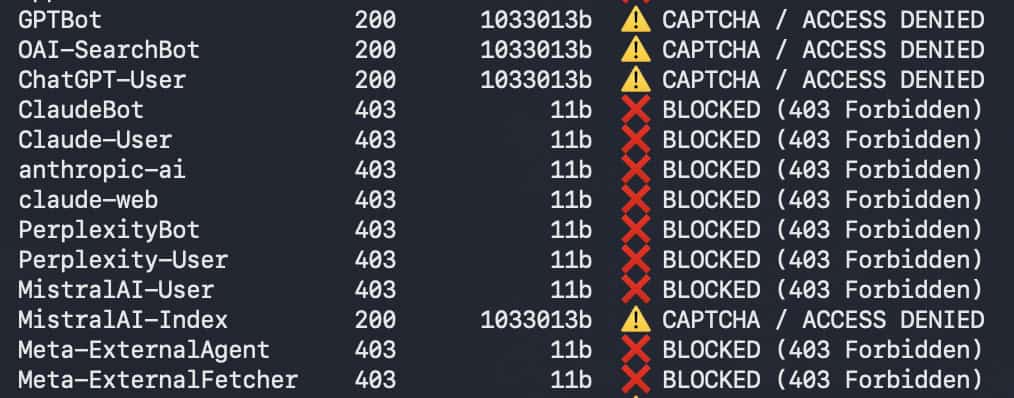 NEW POST
How to Check If AI Crawlers Can Actually Reach Your Site

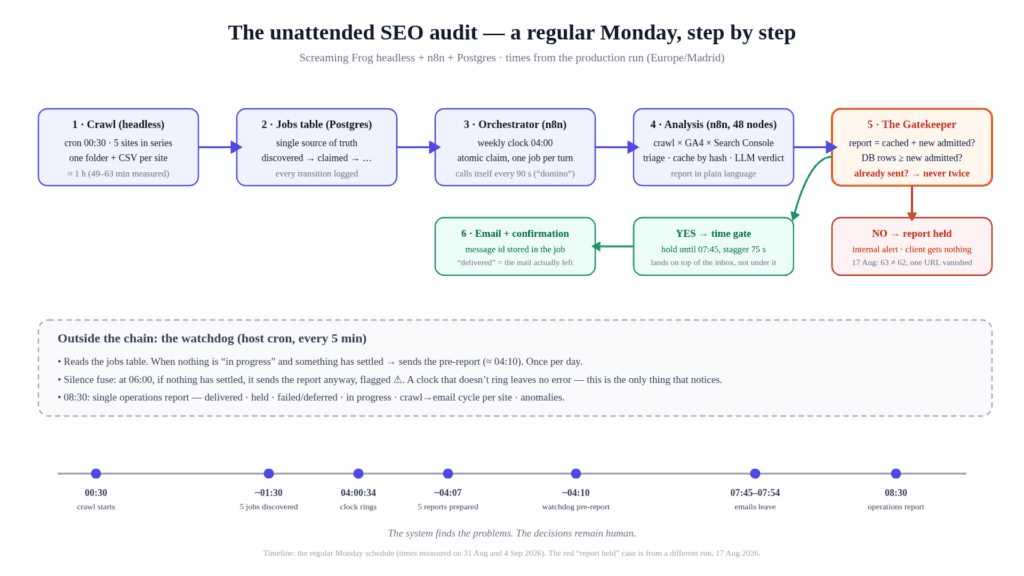 NEW POST
How to build an SEO audit that runs itself (and knows when not to send the report)

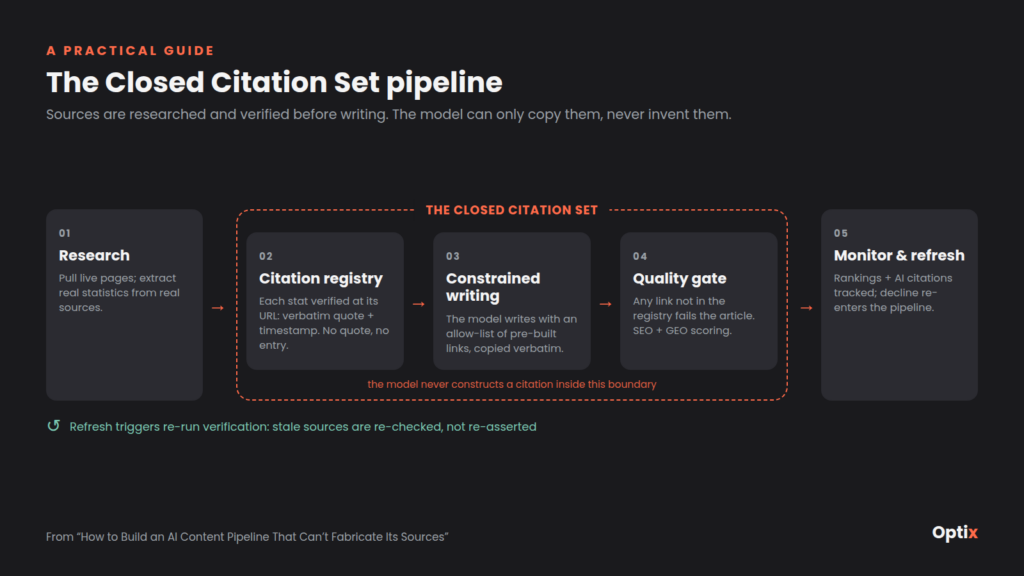 NEW POST
How to Build an AI Content Pipeline That Can’t Fabricate Its Sources